

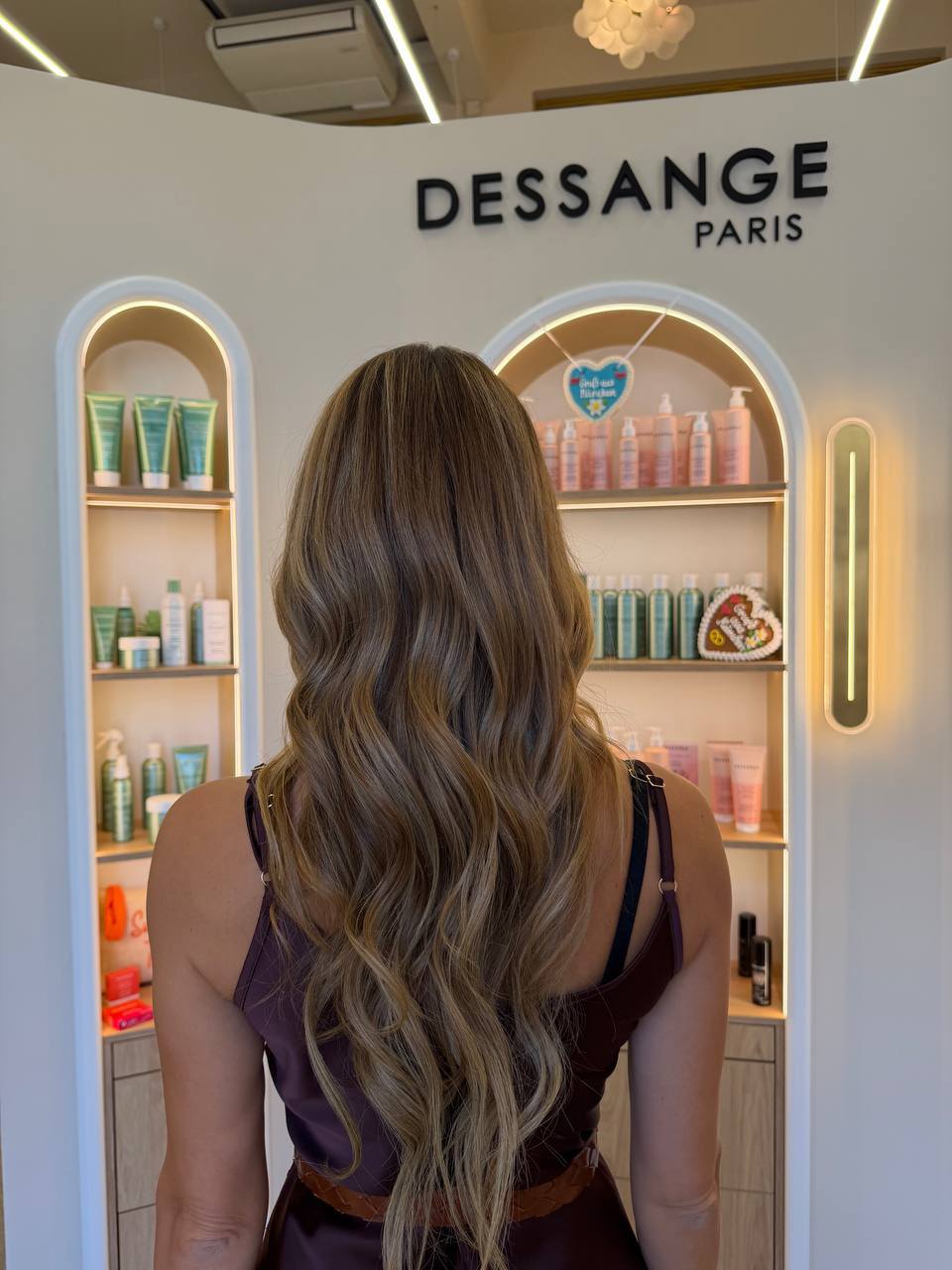
What is balayage?
The word comes from the French balayer, to sweep. That is exactly how the colourist works. With sweeping brushstrokes, she paints lightener freehand onto the surface of individual sections of hair. The colour is lightest through the lengths and ends and fades out towards the root. The result is a soft blend, close to what hair looks like after a summer spent outdoors.
At DESSANGE the technique has a long history. It was already part of the repertoire in Jacques Dessange's Paris salons, and it still defines the DESSANGE look today: natural, with movement, and with no visible effort behind it. We work the same way in our flagship salon in Munich. Every colourist on our team trained at the DESSANGE Academy in Paris.
Why so many of our clients choose it:
- The result looks natural, because the lightening follows the way the hair falls and the shape of the cut.
- Regrowth is barely noticeable. One appointment usually lasts three to six months.
- Only selected sections are lightened and the root is mostly left alone, which is kinder to the hair.
- You choose the intensity, from a few light reflections to a clear contrast.
How does balayage differ from highlights and ombré?
In consultations I often hear: "I'd like highlights, but natural ones." Most of the time that means balayage. The table shows how the common lightening techniques compare:
| Technique | Application | Effect | Regrowth |
|---|---|---|---|
| Balayage | Freehand with a brush, usually without foils | Soft, blended, natural | Barely visible, 3–6 months |
| Foil highlights | In foils, starting right at the root | Even, clearly defined | Root visible after 6–8 weeks |
| Ombré | Horizontal fade from dark to light | Clear contrast between root and ends | Barely visible |
| Babylights | Ultra-fine sections in foils | Delicate and subtle, like a child's naturally light hair | After 8–12 weeks |
| Foilyage | Freehand balayage, wrapped in foil | Like balayage, but noticeably lighter | Barely visible, 3–5 months |
The main difference is placement. Foil highlights are set at even intervals. With balayage, the colourist decides section by section where the light should go, around the face, for instance, or into the ends of a layered cut.
Balayage shades from brown to copper
For a balayage I usually blend two to four shades that sit well together. How far we lighten depends on your starting colour. For a natural result, the lightest pieces are usually two to three levels above your natural shade. These are the tones our clients ask for most often:
Brown balayage
- Chocolate
- Mocha
- Hazelnut
- Caramel
Brown hair takes the technique especially well. The base colour stays, and we simply add lighter reflections in hazelnut, caramel or honey. Brunette hair looks fuller and glossier as a result, without looking "dyed". On light to medium brown I like to use warm shades. Deep chocolate brown pairs well with mocha and cappuccino, because they stay close to the natural colour.
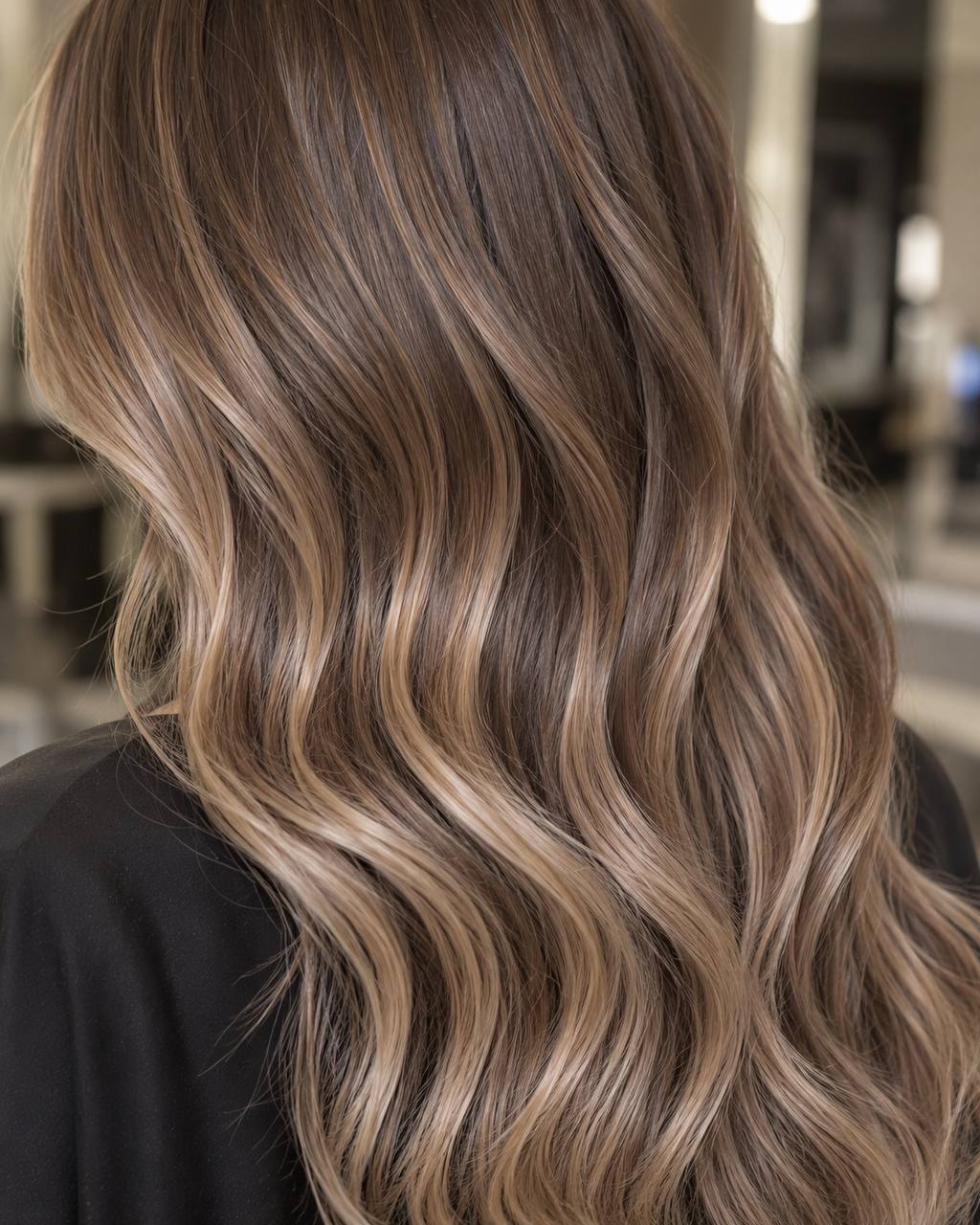
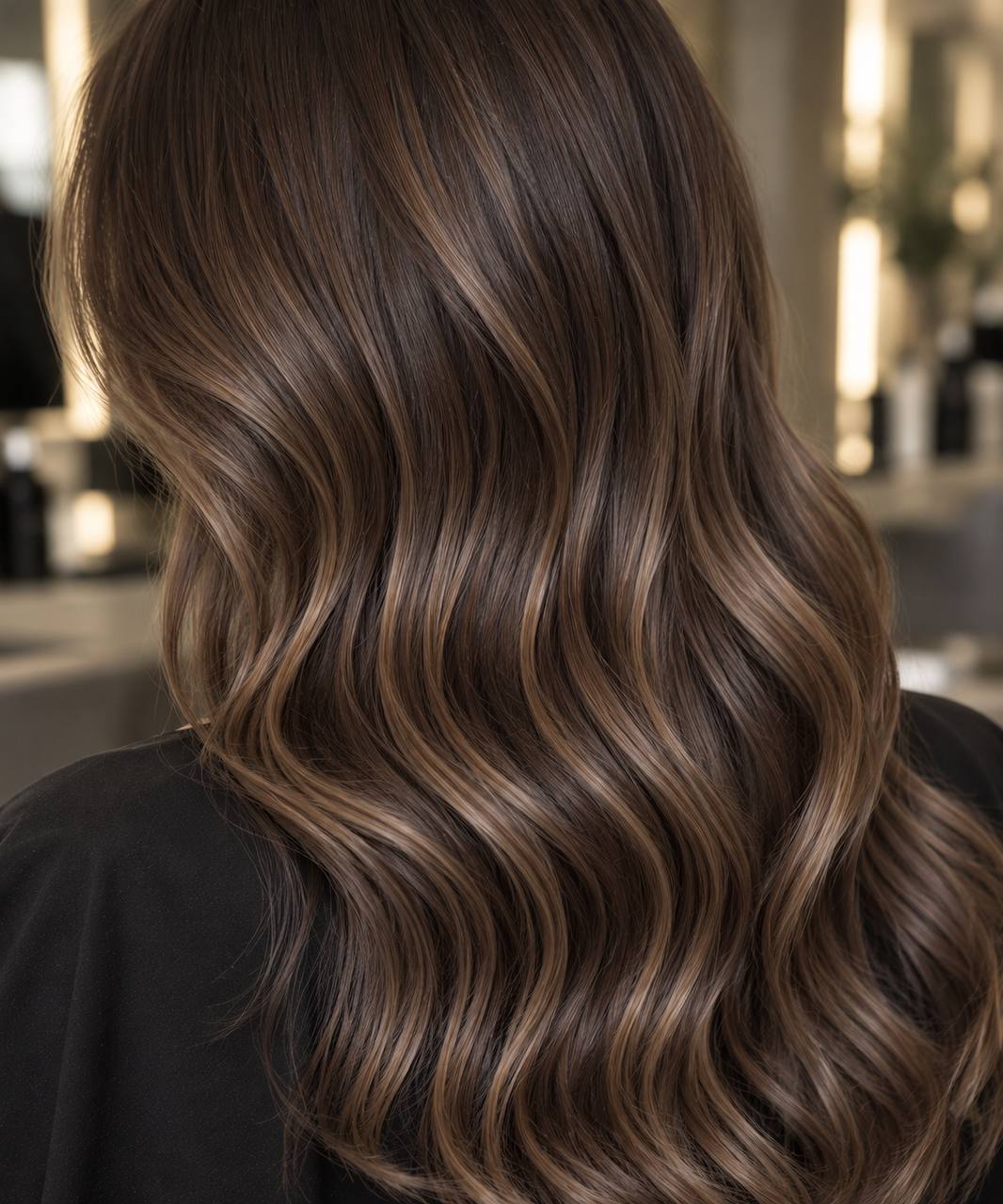
"On brunettes I place the brightest light where the sun would fall naturally: around the face and through the upper lengths. That is what keeps the result looking natural." Olena Nepomiashcha, colourist
Caramel balayage
- Toffee
- Caramel
- Honey
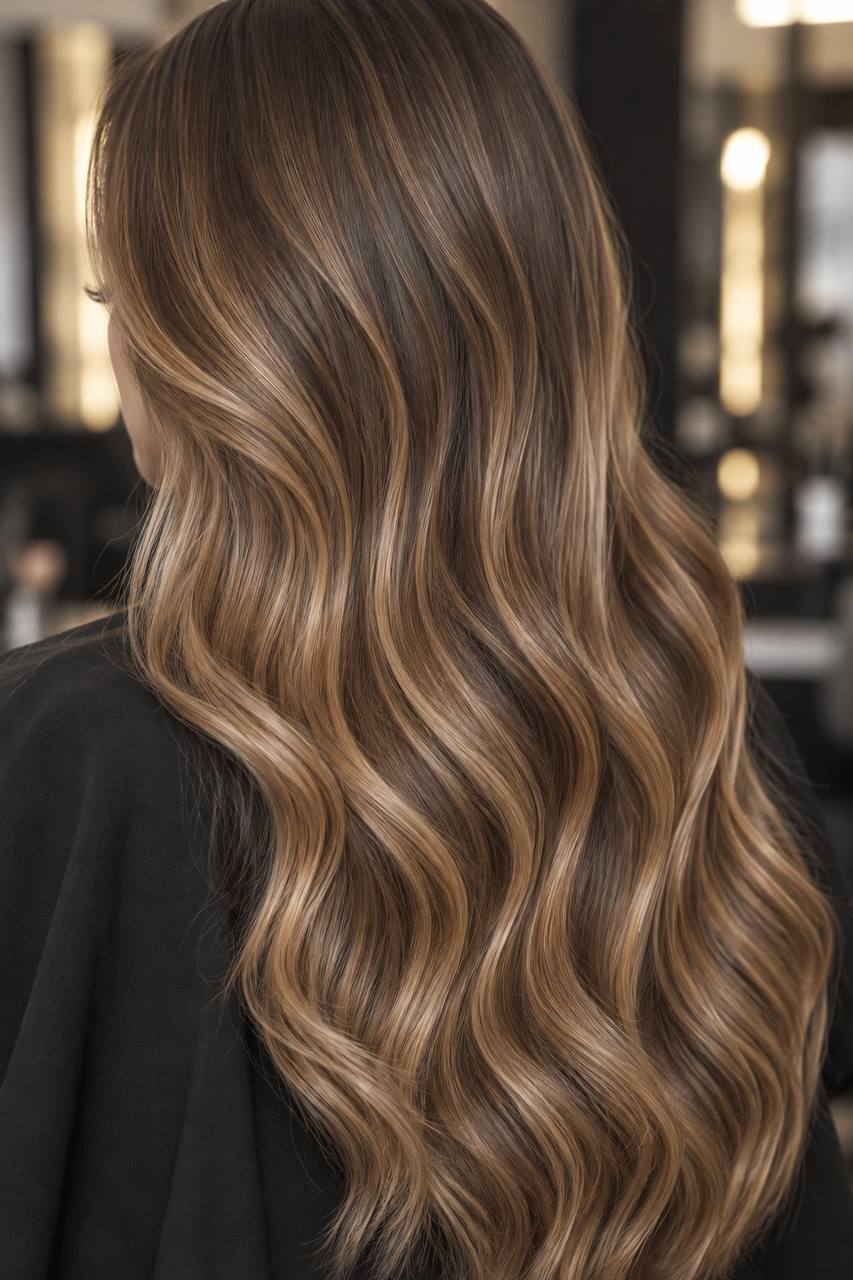
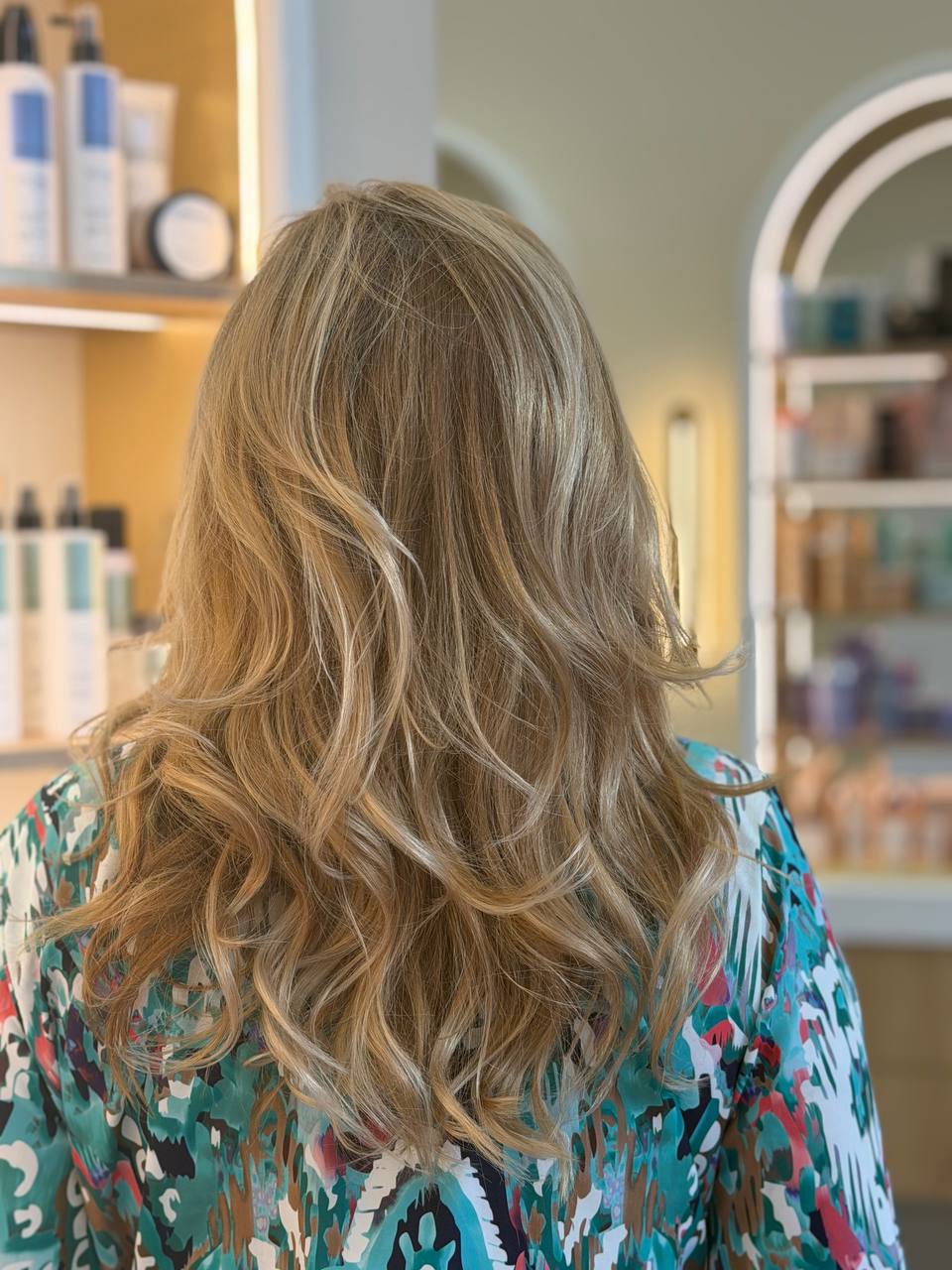
Many clients choose caramel for their first balayage. The warm golden tone suits women with a warm skin undertone and green or brown eyes best. On dark blonde to medium brown hair it gives a rich shine. In autumn we like to mix in a touch of copper.
Blonde, beige blonde & bronde balayage
- Bronde
- Sandy blonde
- Beige blonde
- Champagne
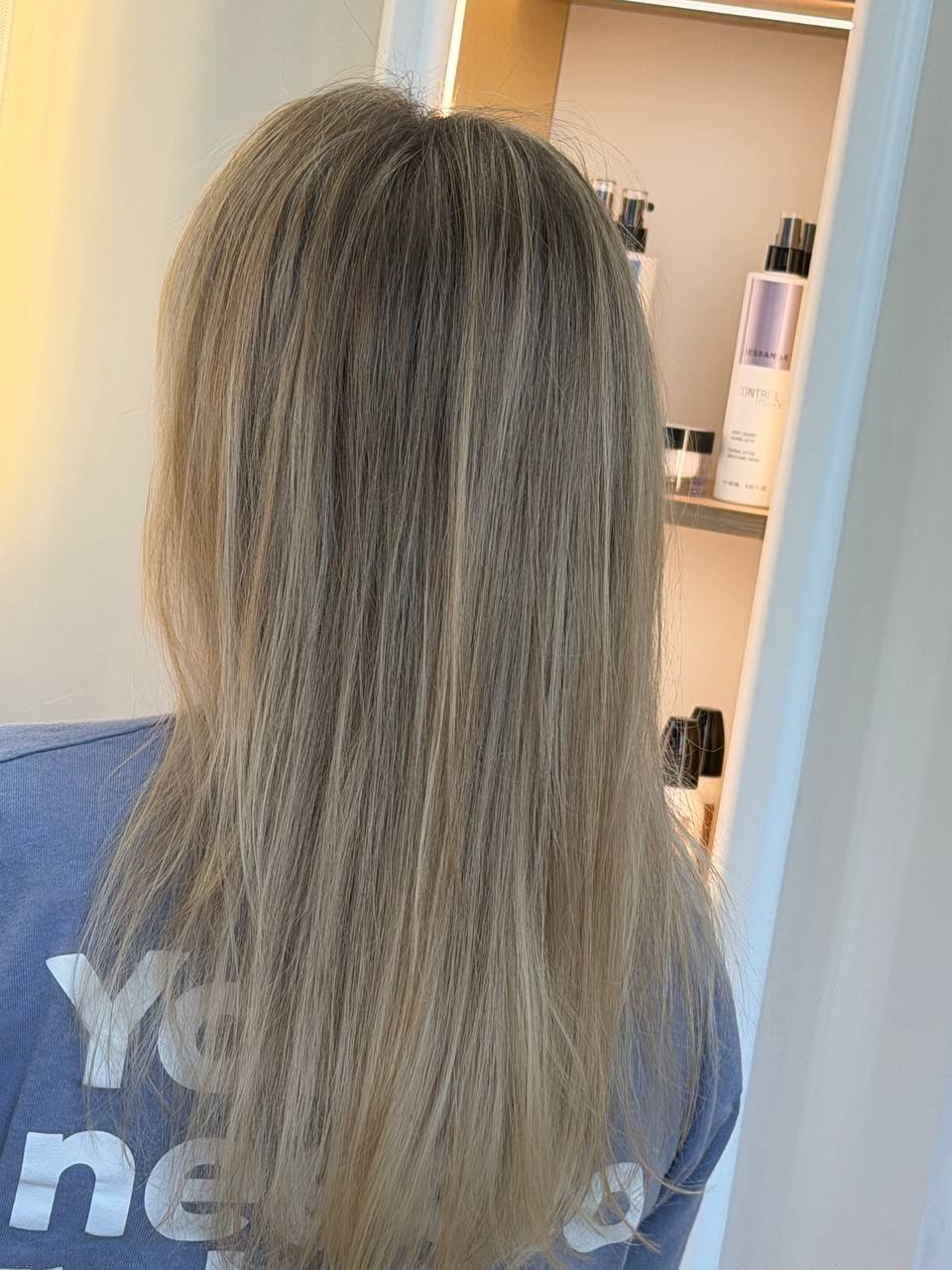
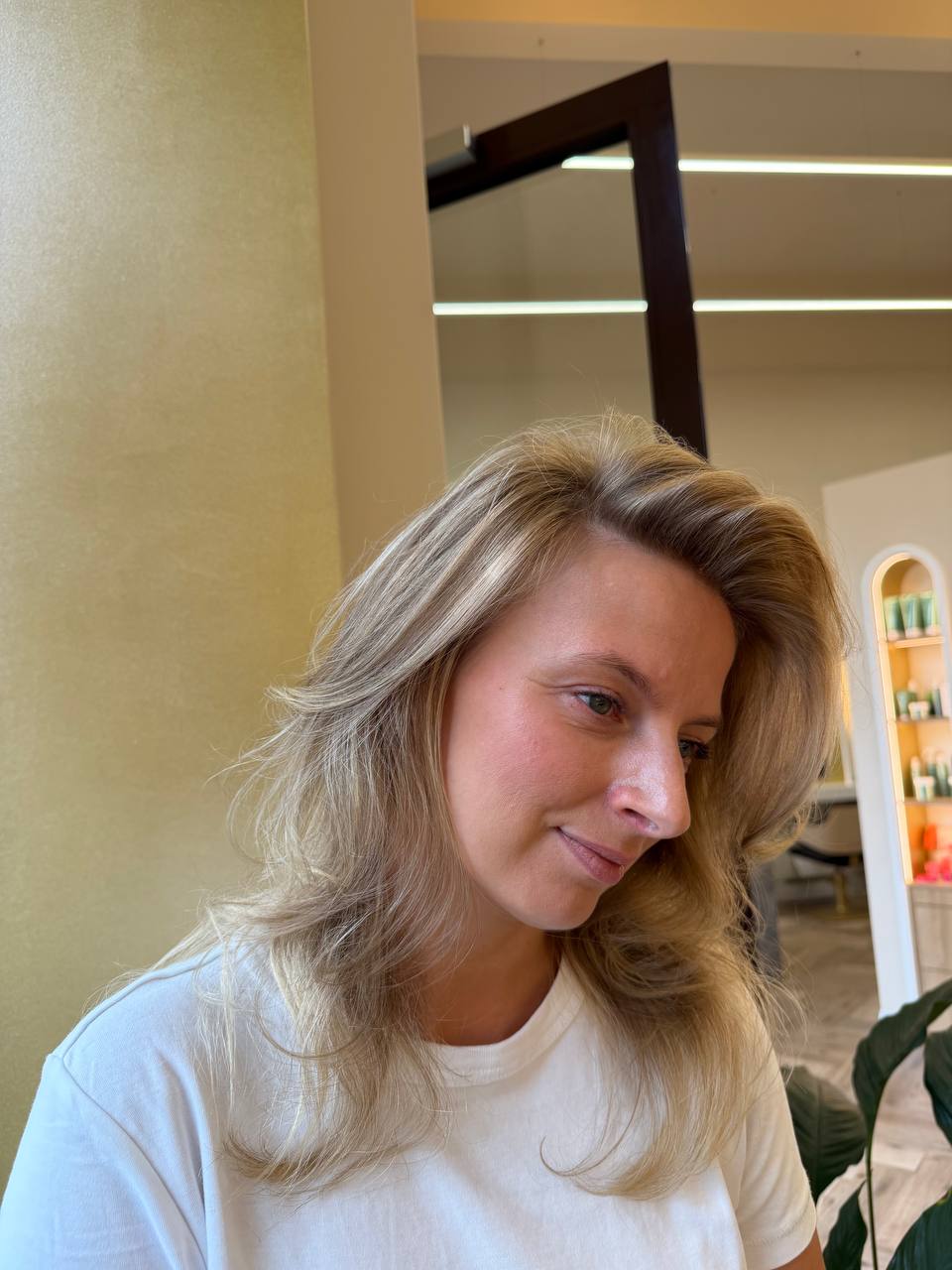
Blonde is my speciality. On dark blonde hair, beige and sand tones create a creamy blonde with no yellow cast. Bronde, a blend of brown and blonde, suits anyone who wants to move from brunette towards blonde without changing their whole colour at once. On natural blondes we strengthen the lighter pieces that appear on their own over the summer.
Ash blonde balayage & cool tones
- Ash blonde
- Pearl blonde
- Ice blonde
Ash, pearl and ice blonde suit a fair complexion with a pink undertone and blue or grey eyes. To keep these shades cool, the appointment has to end with a glossing that neutralises yellow and orange pigments. At our salon it is included in the price.
Copper & red balayage
- Mahogany
- Copper
- Red gold
- Strawberry blonde
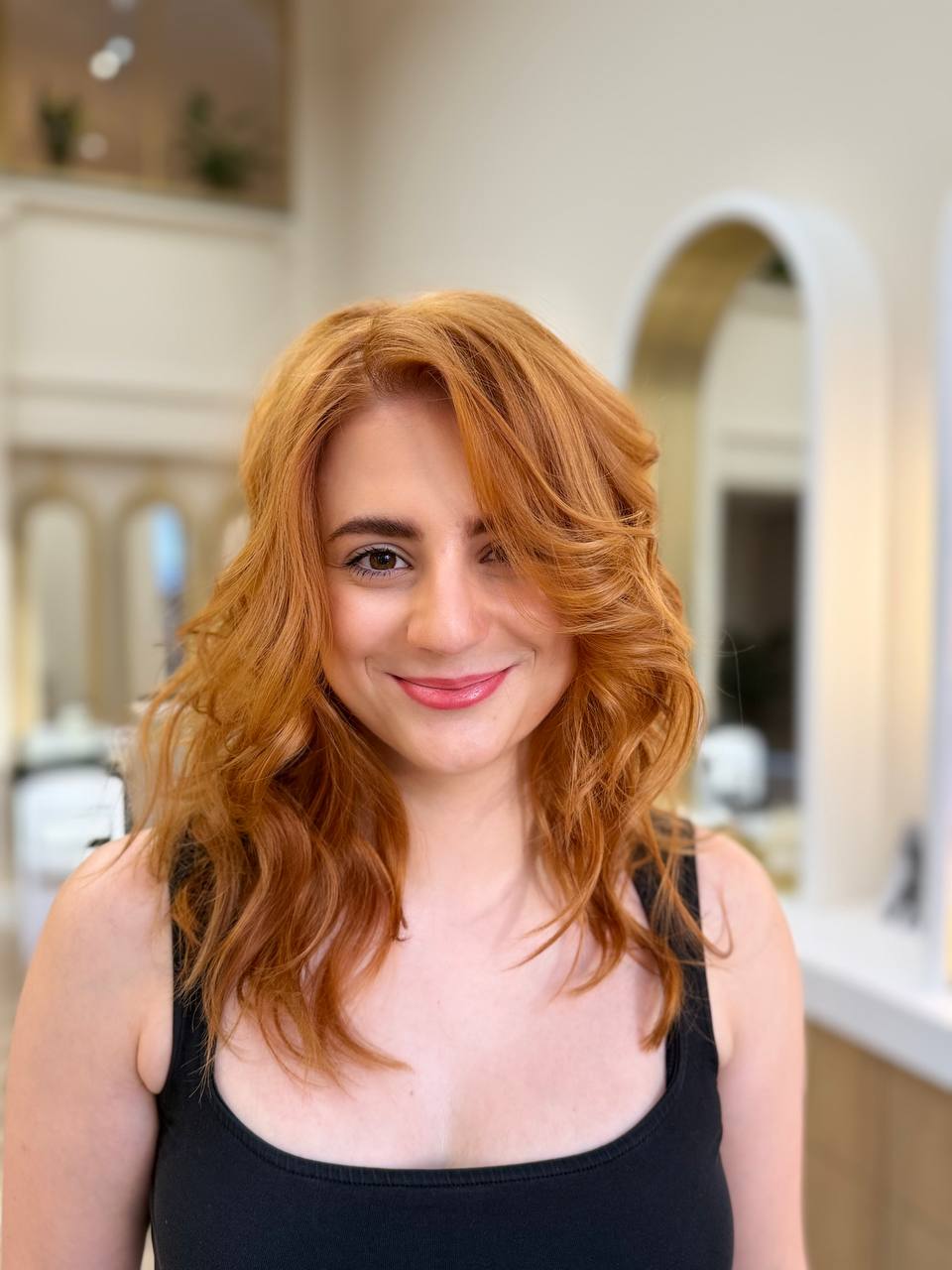
Copper and red make the hair warmer and more eye-catching. On medium brown hair, copper and red gold really glow. Mahogany works on dark hair, and the more understated strawberry blonde on lighter hair. Red pigments fade faster than others. For these shades I recommend a glossing every six weeks and products that protect the colour.
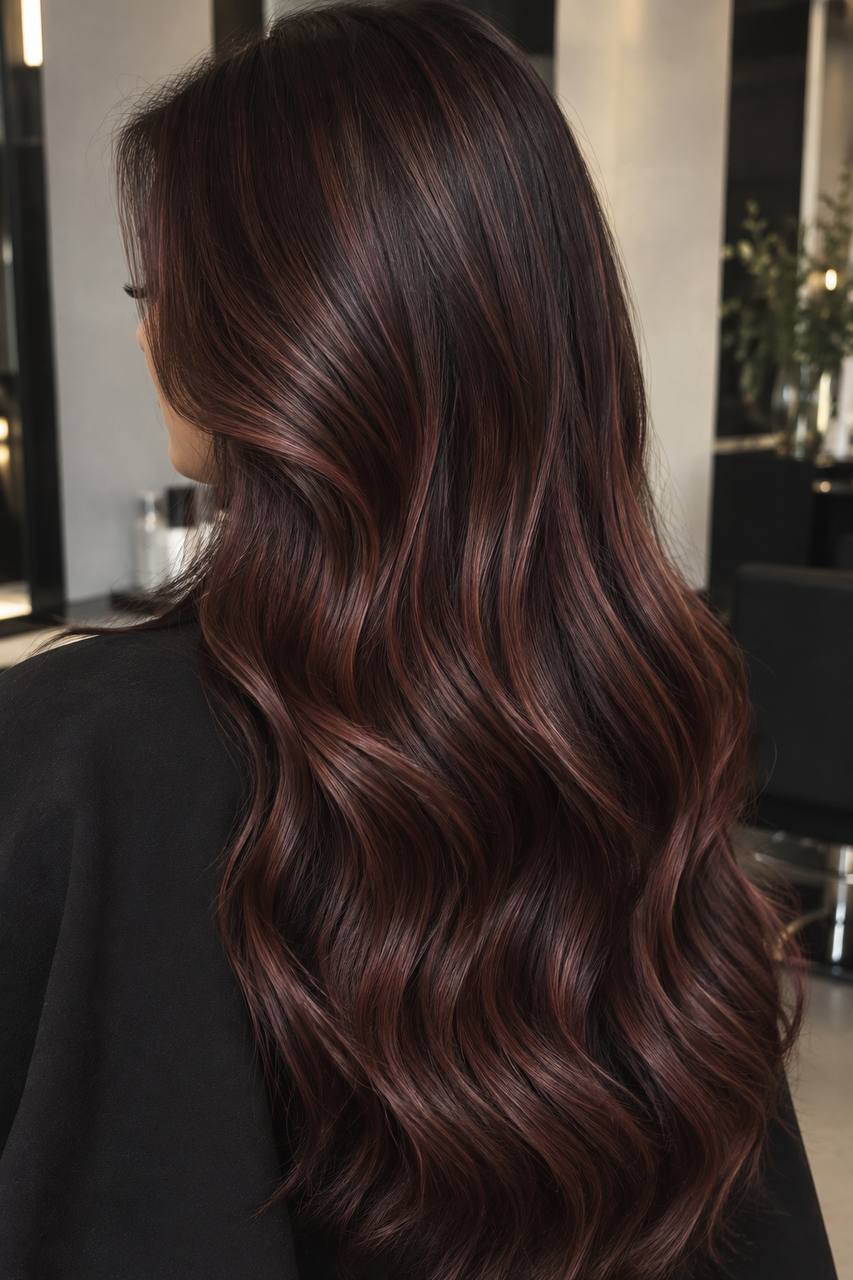
Balayage on dark & black hair
- Espresso
- Chestnut
- Mocha
The technique works on very dark hair too. Espresso, chestnut and mocha give the hair depth without taking away its dark base. If you have black hair and want a noticeably lighter result such as caramel or bronde, we take it in stages, usually over two appointments. That keeps the hair healthy.
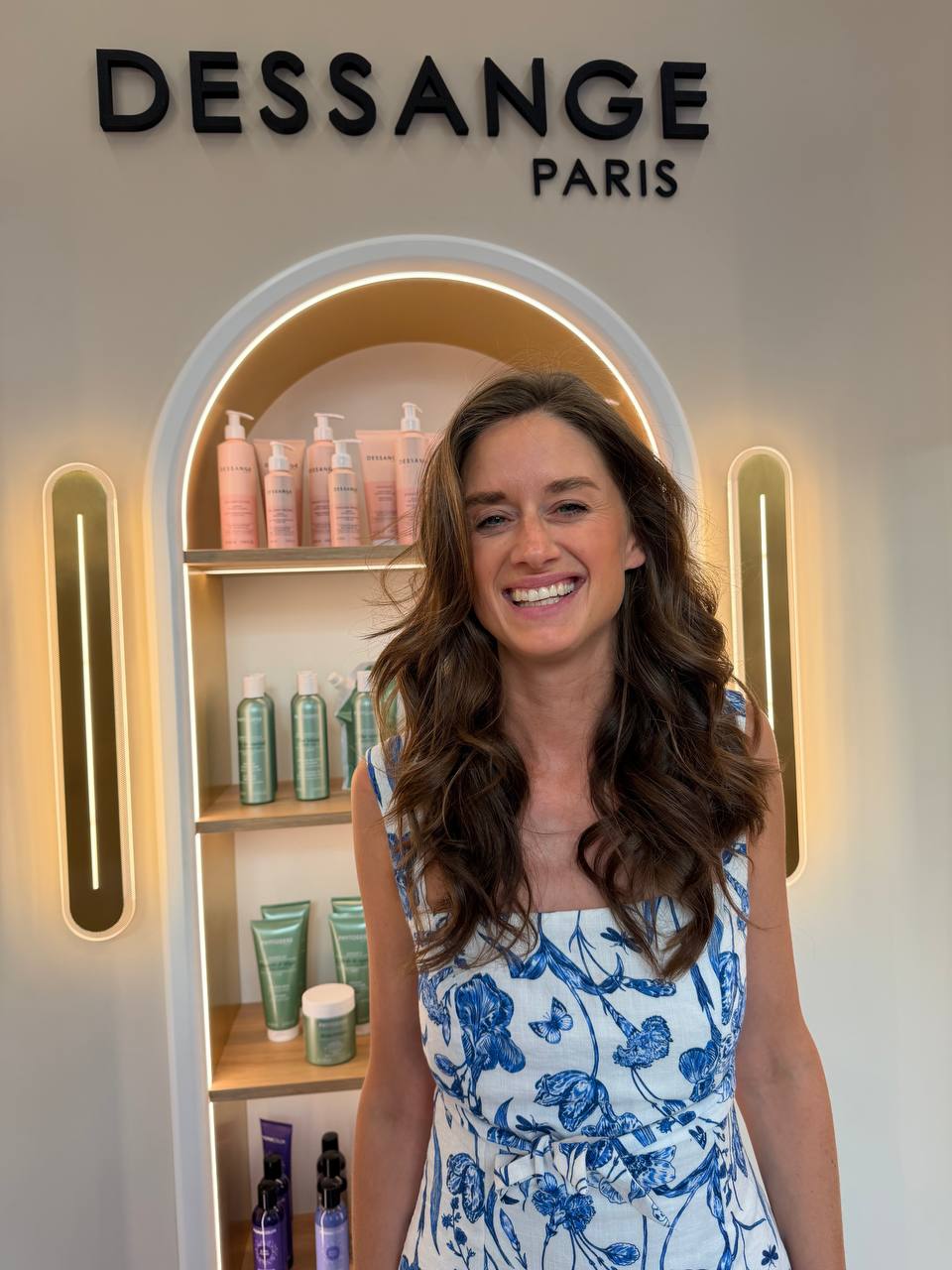
Balayage for grey hair (grey blending)
- Pearl grey
- Silver
- Ice blonde
Many clients no longer want to cover their grey every four weeks. With grey blending we place light silver and pearl shades so that they merge with the natural grey. Regrowth becomes far less noticeable, and the gaps between appointments grow longer.
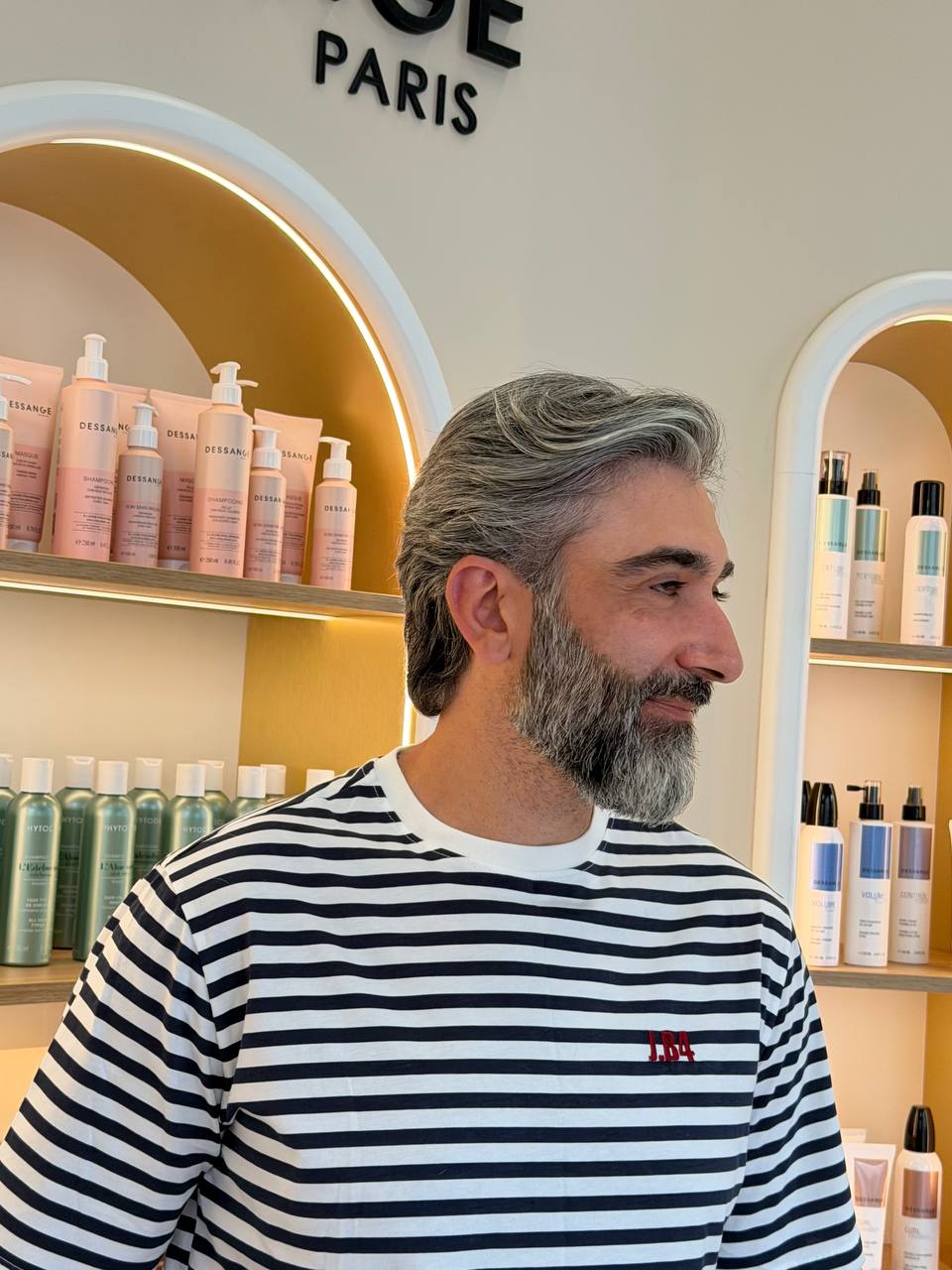
Which balayage shade suits me?
Which tone suits you depends above all on your skin undertone. A simple test: if the veins on your wrist look greenish and gold jewellery flatters you, your undertone is probably warm. If they look bluish and you prefer silver, your undertone is more likely cool.
| Undertone | Signs | Recommended balayage shades |
|---|---|---|
| Warm | Golden or peachy complexion, gold suits you | Caramel, honey, copper, golden blonde, hazelnut |
| Cool | Pink or fair complexion, silver suits you | Ash blonde, pearl blonde, mocha, cappuccino, ice blonde |
| Neutral | Gold and silver suit you equally well | Beige blonde, bronde, sandy blonde, champagne |
Bring two or three photos you like to your appointment, and ideally one you don't. That often tells us more than any description.
Types of balayage, from Face Frame to Full Head
Depending on how much change you want, we work on areas of different sizes:
Face Frame & money piece
With a Face Frame we lighten only the front sections that frame the face. It brightens the complexion, and the appointment takes around 75 minutes. It is a good way to try the technique for the first time. A money piece is the version with especially high-contrast pieces right at the face.
Head Crown balayage
Here we lighten the sections you see when the hair is worn down: the top layer and the sides. The underneath stays in your natural colour and provides depth. The result looks very natural.
Full Head balayage
Here we spread the lightening all the way round, including the underneath and the nape. It is worth it if you often wear your hair in a ponytail or pinned up, because then the lower sections show as well.
Balayage on short hair
The technique also works on a bob, lob or pixie. We use shorter, finer brushstrokes that bring the cut to life.
Reverse balayage & root shadow
If your hair is already very light and you would like more depth, reverse balayage places darker shades through the lengths. A root smudge softens the line at the root and noticeably extends the time until your next appointment.
Balayage on video
This is what a fresh balayage looks like straight after the appointment: a soft blend from brown to blonde, filmed at our salon on Ludwigstraße.
Bronde balayage with soft waves and lighter pieces around the face, DESSANGE salon on Ludwigstraße.
Your balayage appointment at DESSANGE Munich, step by step
- Personal colour consultationWe talk about what you want, your daily routine and any previous colour, and choose the right shades based on your skin undertone and eye colour. The consultation is in English or German, as you prefer.
- Hair and scalp analysisIf your hair has been coloured before, we do a strand test where needed so we can plan the result with confidence.
- Freehand applicationYour hair is divided into sections. The lightener is then painted on section by section with a brush, following the lines of your cut.
- Processing time with checksWe check the level of lift regularly so the result matches exactly the tone we agreed on. While you wait, we are happy to serve you lunch from the café next door, brought straight to your chair.
- Glossing (included)The glossing fine-tunes the tone, neutralises any unwanted reflections and adds shine.
- Haircare (included)The haircare treatment smooths the hair surface after lightening and leaves it soft and supple again.
- Styling & aftercare adviceIf you wish, we style your hair to finish (booked separately) and send you home with a personal care routine.
Balayage Munich: prices at DESSANGE
How much does balayage cost in Munich? The price depends mainly on how much of the hair we work on and how much time the technique needs. At DESSANGE, glossing and haircare are always included in the price and never charged separately.
| Service | Time | Price |
|---|---|---|
| Balayage Face Frame | 75 min | €80 |
| Balayage Short Hair | 110 min | €100 |
| Balayage Head Crown | 160 min | €180 |
| Balayage Full Head | 170 min | €230 |
| Additional Styling for Color Treatment | 35 min | €40 |
| Glossing (refresh between appointments) | 30 min | €60 |
| Chroma Mask | 10 min | €15 |
| Hair / Scalp Treatment (additional) | 20 min | €20 |
| Highlights (Head Crown) incl. Glossing | 90 min | €190 |
| Highlights (Full Head) incl. Glossing | 140 min | €270 |
Styling is not included in the price of a colour service and is booked separately. We decide together in the consultation which option suits your hair. You will find all services and prices in our overview of services.
How do you look after balayage so the colour lasts?
The colour grows out very naturally. Most of my clients come back after three to six months. To keep the tone fresh until then, I recommend the following:
- Use a sulphate-free shampoo for coloured hair and wash with lukewarm water rather than hot.
- Apply a mask once a week, because lightened sections dry out faster.
- Always use heat protection before blow-drying, straightening or curling.
- Purple shampoo only on cool blondes and no more than once a week, or the hair turns dull.
- On holiday, use a leave-in with UV filter and rinse out chlorinated water as soon as you leave the pool.
- Plan a glossing every six to eight weeks. It refreshes tone and shine, and the next big appointment can wait.
Common balayage problems and how we fix them
Some clients come to us after a lightening service elsewhere did not turn out as hoped. The most frequent cases, and what we do about them:
A hard line at the root
If the lightener was placed too high or too evenly, a visible band appears. A root shadow in your natural colour blurs the line again.
Yellow or orange tones
Lightening exposes warm pigments. A carefully chosen glossing neutralises them and brings back the beige, ash or caramel tone you wanted.
Too little effect
If the result is barely visible, we add light around the face (Face Frame) or through the top layer, without treating the whole head again.
Dry, straw-like ends
A trim of the ends and an intensive treatment help here. Going forward, we plan the lightening so that lengths that have already been stressed are left alone.
About the author: Olena Nepomiashcha
Olena has worked in the beauty industry for 14 years. She is trained in the DESSANGE techniques for cutting and colouring and specialises in blonde and balayage. What matters to her is a result that suits the client's personality and still looks good on an ordinary weekday.
Frequently asked questions about balayage in Munich
How much does balayage cost in Munich at DESSANGE?
At DESSANGE Paris in Munich, balayage starts at a Face Frame. Short hair, the Head Crown and a Full Head. Glossing and haircare are always included. Styling is booked separately.
What decides the price of a balayage?
The price depends mainly on how much of the hair we lighten: Face Frame, Short Hair, Head Crown and Full Head. Glossing and haircare are included in every price. If you would like styling afterwards, it is booked on top. To refresh the tone between appointments we recommend a glossing.
How long does balayage last?
Because the colour fades out softly towards the root, balayage grows out with very little visible regrowth. Most of our clients come back after three to six months. A glossing every six to eight weeks keeps the tone fresh in between.
How long does a balayage appointment take?
Depending on the option, between 75 minutes for a Face Frame and around 170 minutes for a Full Head, each including glossing and haircare. If you add styling, allow another 35 minutes.
Does balayage damage your hair?
Any lightening puts some stress on the hair. Balayage is one of the gentlest methods, though, because only selected sections are lightened and the root is usually left untouched. During lightening we protect the hair structure with a bond-building additive, and every appointment ends with glossing and haircare.
Does balayage work on dark or black hair?
Yes. On dark hair, warm shades such as mocha, caramel or chestnut look especially refined. On black hair we reach very light results step by step over two appointments, so the hair stays in good condition.
Balayage or highlights: which is better?
Balayage is painted on freehand and fades softly towards the root. It looks more natural and needs less upkeep. Classic foil highlights start right at the root and are the better choice if you want an even, consistent blonde all over.
Can you do balayage on short hair?
Yes. On a bob, lob or pixie we use finer, shorter brushstrokes that bring out the shape of the cut. DESSANGE offers this as the Balayage Short Hair option.
Can I have balayage on hair that is already coloured?
In most cases, yes. What matters is which colour is already in the hair. With henna, very dark direct dyes or several layers of colour, we do a strand test first and plan the route to your chosen shade together with you.
How do I look after balayage at home?
Use a sulphate-free shampoo for coloured hair, a mask once a week and heat protection every time before blow-drying. A purple shampoo helps light, cool shades stay free of yellow tones, but should be used no more than once a week.